Faculty
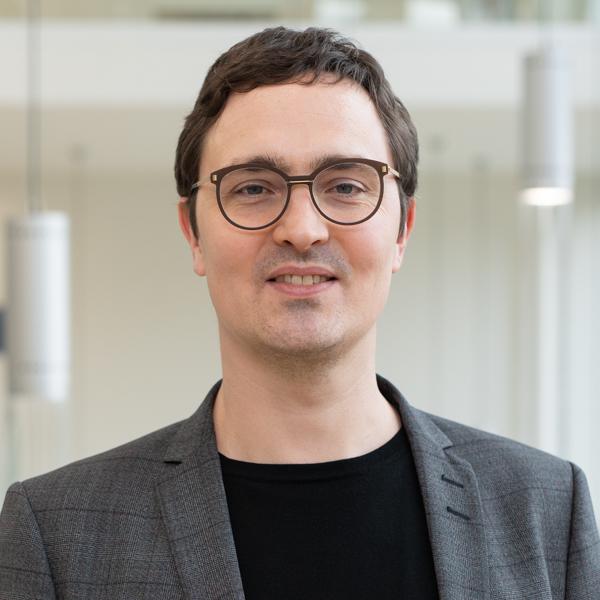
Prof. Dr. Mario Fritz is a faculty at the CISPA Helmholtz Center for Information Security, an honorary professor at Saarland University, and a fellow of the European Laboratory for Learning and Intelligent Systems (ELLIS). Until 2018, he led a research group at the Max Planck Institute for Computer Science. Previously, he was a PostDoc at the International Computer Science Institute (ICSI) and UC Berkeley after receiving his PhD from TU Darmstadt and studying computer science at FAU Erlangen-Nuremberg. His research focuses on trustworthy artificial intelligence, especially at the intersection of information security and machine learning. He is Associate Editor of the journal "IEEE Transactions on Pattern Analysis and Machine Intelligence (TPAMI)," coordinates the Helmholtz project "Trustworthy Federated Data Analytics," and has published over 100 scientific articles - 80 of them in top conferences and journals.
Usenix Security Symposium (USENIX-Security)
International Conference on Machine Learning (ICML)
International Conference on Machine Learning (ICML)
International Conference on Machine Learning (ICML)
Privacy Enhancing Technologies Symposium (PETS)
Annual Conference of the North American Chapter of the Association for Computational Linguistics (NAACL)
Annual Conference of the North American Chapter of the Association for Computational Linguistics (NAACL)
German Conference on Pattern Recognition (GCPR)
IEEE Conference on Secure and Trustworthy Machine Learning (SaTML)
IEEE Transactions on Pattern Analysis and Machine Intelligence