Faculty
2022: Busy Beaver Award für "Privacy of Machine Learning"
2019: Best paper award at NDSS
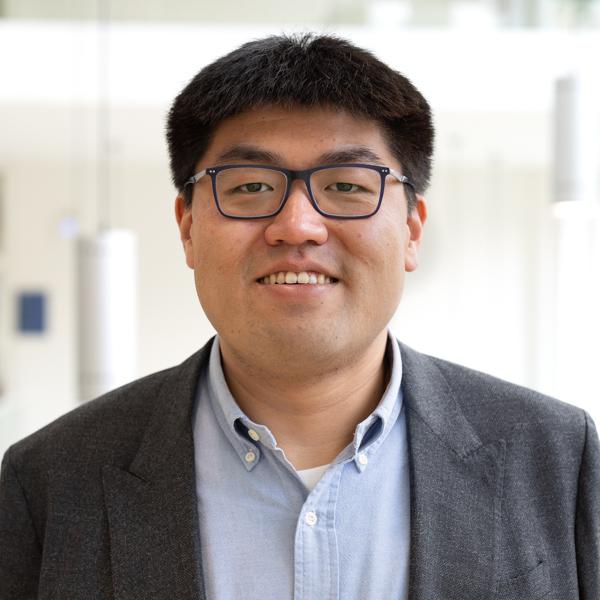
Dr. Yang Zhang ist Faculty am CISPA. Seine Forschung konzentriert sich auf Trustworthy Machine Learning (Privacy, Safety und Security). Außerdem arbeitet er an der Messung und dem Verständnis von Fehlinformationen und unsicheren Inhalten wie hasserfüllten Memes im Internet. Im Laufe der Jahre hat er zahlreiche Paper auf Spitzenkonferenzen in Informatik, einschließlich CCS, NDSS, Oakland und USENIX Security veröffentlicht. Seine Arbeit hat 2019 den NDSS Distinguished Paper Award und 2022 den CCS Best Paper Award Runner-up erhalten.
European Association for Computational Linguistics (EACL)
IEEE Transactions on Dependable and Secure Computing
National Conference of the American Association for Artificial Intelligence (AAAI)
Conference on Neural Information Processing Systems (NeurIPS)
Conference on Neural Information Processing Systems (NeurIPS)
Conference on Empirical Methods in Natural Language Processing (EMNLP)
IEEE International Conference on Computer Vision (ICCV)
ACM Conference on Computer and Communications Security (CCS)
IEEE Transactions on Dependable and Secure Computing
Usenix Security Symposium (USENIX-Security)